








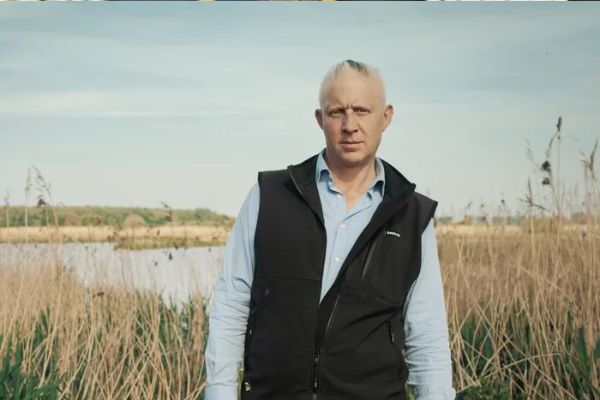
Jacob Fiennes, better known as Jake Fiennes, has built a remarkable career far away from the film industry that made his family name famous. While his brothers Ralph Fiennes and Joseph Fiennes became internationally recognised actors, Jacob followed a very different path. His professional life has centred on farming, land management, wildlife and conservation, making him an influential voice in the changing relationship between British agriculture and nature.
Who Is Jacob Fiennes?
Jacob Fiennes is an English conservationist and land-management specialist whose work focuses on finding practical ways to protect wildlife while maintaining productive farmland. Born in 1970, he belongs to the well-known Fiennes family and is the twin brother of actor Joseph Fiennes. However, rather than pursuing acting, Jacob developed a career rooted in the countryside and gained decades of experience working on private estates.
His career has become particularly associated with Norfolk, where he has worked extensively on large-scale conservation projects. Today, he is known professionally as Jake Fiennes and has become an important figure in British environmental discussions. His approach does not simply focus on leaving land untouched; instead, he promotes thoughtful management that allows farming, biodiversity and landscape restoration to work alongside one another.
Jacob Fiennes and His Famous Family
Jacob Fiennes comes from an unusually accomplished family. His parents were photographer Mark Fiennes and writer and artist Jennifer Lash, while his siblings include Ralph Fiennes, Joseph Fiennes, Martha Fiennes, Magnus Fiennes and Sophia Fiennes. The family has produced actors, writers, filmmakers and musicians, but Jacob chose an entirely different professional direction.
His connection with Joseph Fiennes is especially interesting because the two were born in the same year and are twins. Joseph went on to establish himself as a successful actor through projects including Shakespeare in Love, Elizabeth and The Handmaid’s Tale. Jacob, meanwhile, developed a career in the countryside, eventually becoming recognised for his knowledge of conservation and estate management.
Jacob Fiennes’ Early Career in Conservation
Before becoming a prominent conservation figure, Jacob Fiennes spent many years working directly with land and wildlife. His early experience included gamekeeping and estate management, giving him a practical understanding of how countryside management operates on the ground. That experience later became an important part of his conservation philosophy because he understood both agricultural priorities and the needs of wildlife.
Fiennes spent around 24 years working at the Raveningham Estate in Norfolk before moving to the Holkham Estate. During his time there, he developed a reputation for combining farming with conservation rather than treating the two as opposing interests. Consequently, his career became an example of how traditional estate management could evolve towards broader environmental goals.
From Gamekeeper to Conservation Leader
The transition from gamekeeping and estate management to modern conservation is one of the most interesting parts of Jacob Fiennes’ professional story. His background gave him first-hand knowledge of habitats, farmland and wildlife, while his later work placed greater emphasis on biodiversity and habitat restoration. Rather than abandoning his earlier experience, he used it as a foundation for a broader conservation strategy.
This practical background also helps explain why Fiennes often speaks about conservation in terms that farmers can understand. He has argued for approaches that can be implemented within working landscapes rather than relying solely on idealised ideas of rewilding. As a result, his work has attracted attention from both agricultural and environmental circles.
Jacob Fiennes at Holkham Estate
One of the defining chapters of Jacob Fiennes’ career began when he joined the Holkham Estate in Norfolk. He became General Manager for Conservation in 2018, taking on responsibility for conservation across a vast estate covering about 25,000 acres. His role involves managing landscapes, supporting biodiversity and developing projects that bring environmental considerations into farming and estate operations.
Holkham is particularly significant because its landscape includes farmland, wetlands, woodland, coastline and the Holkham National Nature Reserve. This gives Fiennes an unusually broad setting in which to apply his conservation ideas. His responsibilities extend beyond protecting individual species; they involve thinking about entire habitats and how different elements of the landscape interact.
Restoring Habitats and Supporting Wildlife
Under Fiennes’ conservation leadership, work at Holkham has included wetland management, bird monitoring, habitat creation and landscape-scale environmental projects. One notable focus has been restoring historic drainage systems and creating conditions that can support wetland wildlife. These projects demonstrate his belief that relatively practical changes to land management can have significant ecological benefits.
Fiennes has also championed the idea that farmers and landowners should understand the wildlife already present on their land. Monitoring birds, insects, plants and other species can provide valuable information about whether conservation measures are working. More importantly, it can encourage land managers to take greater ownership of their environmental responsibilities.
Jacob Fiennes and Sustainable Farming
A central theme in Jacob Fiennes’ work is the relationship between food production and nature. He does not present farming and conservation as completely separate activities. Instead, he argues that productive agricultural land can also provide space for wildlife when it is managed intelligently. This philosophy has become increasingly relevant as Britain considers how farming policy can respond to biodiversity loss and climate pressures.
His work at Holkham has included projects designed to test new approaches to farming and environmental management. These initiatives explore how agricultural productivity can coexist with healthier soils, habitats and wildlife. Therefore, his influence extends beyond conventional conservation because he is interested in changing how people think about the whole farming system.
A Practical Approach to Rewilding
Jacob Fiennes has also contributed to discussions surrounding rewilding, although his approach is often more practical than simply allowing nature to take over. He favours active land management and carefully considered interventions that can restore habitats while recognising the realities of modern farming.
That distinction is important. For Fiennes, conservation often means understanding a landscape first and then deciding what intervention will produce the best ecological result. Sometimes that may involve restoring wetlands or creating habitats; at other times, it may mean changing how existing farmland is managed. His work therefore presents conservation as an active, long-term process.
Jacob Fiennes as an Author
Jacob Fiennes expanded his influence beyond estate management with his book Land Healer. The book explores his experiences working with the British countryside and sets out his argument that farming can play an important role in restoring nature. Rather than treating environmental recovery as something that happens separately from agriculture, the book considers how land managers can become part of the solution.
The ideas behind Land Healer reflect the principles that have shaped Fiennes’ professional career. He places considerable importance on observation, practical action and collaboration. His message is particularly relevant to debates about Britain’s countryside because farmers control and manage a significant proportion of the landscape, making their involvement essential to any large-scale effort to improve biodiversity.
Jacob Fiennes’ Personal Life and Marriage
Although Jacob Fiennes has become increasingly visible through his conservation work, he has generally maintained a much lower public profile than his famous siblings. He married Melanie Plaice in 1999, and the couple have two children. Details about his family life remain relatively private, reflecting the fact that Fiennes has focused much of his public work on environmental issues rather than celebrity.
This privacy also distinguishes him from the more public-facing members of the Fiennes family. While Ralph and Joseph have spent decades in front of cameras, Jacob’s professional life has largely unfolded outdoors, among farms, wetlands, forests and nature reserves. His public reputation therefore comes mainly from his expertise and conservation achievements.
Jacob Fiennes’ Influence on British Conservation
Jacob Fiennes has developed a reputation as an influential advocate for practical conservation and better land management. His work has involved collaboration with organisations and government-related environmental initiatives, while his experience has made him a sought-after contributor to discussions about farming and biodiversity.
His influence comes partly from his ability to bridge two worlds that can sometimes appear divided. Farmers need to produce food and maintain viable businesses, while conservationists want to restore habitats and protect declining species. Fiennes’ career demonstrates that these objectives do not always have to conflict. With careful planning, he believes land can serve both people and nature.
What Makes Jacob Fiennes Different?
What makes Jacob Fiennes particularly fascinating is the contrast between his family background and his chosen career. He could easily have become known primarily as Joseph Fiennes’ twin brother or another member of the celebrated Fiennes family. Instead, he created an identity based on land, wildlife and environmental stewardship.
His journey from gamekeeper and estate manager to an influential conservation leader also reflects the changing priorities of Britain’s countryside. Conservation today increasingly involves farmers, landowners, scientists and policymakers working together. Fiennes has positioned himself within that conversation by bringing practical experience to environmental challenges.
Final Thoughts on Jacob Fiennes
Jacob Fiennes has followed a distinctive path that sets him apart from his famous family. Known professionally as Jake Fiennes, he has spent decades working with Britain’s landscapes and has become a prominent advocate for conservation that works alongside farming. His leadership at Holkham, environmental projects and writing have helped bring greater attention to the potential of working landscapes.
Ultimately, Jacob Fiennes’ story is not simply about being related to famous actors. It is about building an independent career around a strong belief in nature, farming and responsible land management. As Britain continues to search for practical ways to restore biodiversity while producing food, his experience offers an important perspective on how the countryside can be managed for both people and wildlife.