








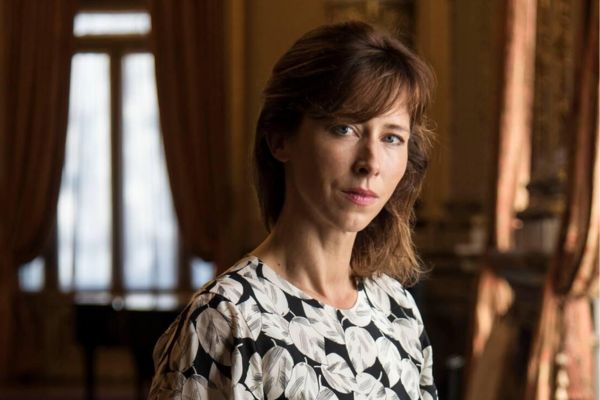
Who Is Sophie Hunter?
Sophie Hunter is a British theatre and opera director, playwright, filmmaker and former performer whose creative career stretches far beyond her public association with actor Benedict Cumberbatch. Born in London on 16 March 1978, she developed an interest in performance from an early age and eventually built a distinctive reputation for experimental, visually rich and multidisciplinary productions. Her work brings together theatre, opera, music, film, puppetry and visual art, making her an especially interesting figure in contemporary British performance.
Although many people first discovered Sophie Hunter through her marriage to Benedict Cumberbatch, her professional achievements stand firmly on their own. She has directed productions in Britain, Europe and the United States and has worked across both conventional stages and unusual performance spaces. Rather than following a single artistic formula, Hunter has consistently explored new ways of connecting audiences with stories, music and performers. Consequently, her career has developed around curiosity, collaboration and a willingness to experiment.
Sophie Hunter’s Early Life and Education
Sophie Irene Hunter was born in London and attended St Paul’s Girls’ School before studying Modern Languages at the University of Oxford, where she focused on French and Italian. Her university years helped broaden her understanding of European culture and performance. However, it was her subsequent training in Paris that proved particularly important. Hunter studied at the École Internationale de Théâtre Jacques Lecoq, a renowned institution associated with physical and experimental approaches to theatre.
Hunter has explained that her experiences at Lecoq changed the direction of her ambitions. She had initially been focused on acting, but her training helped her understand theatre from a wider perspective, including its architecture, rhythm, movement and visual language. She later trained at the Saratoga International Theatre Institute in New York under director Anne Bogart. These experiences gave her a foundation that would eventually influence the highly physical and visually imaginative style that became characteristic of her directing work.
Sophie Hunter’s Breakthrough as a Theatre Director
A major turning point arrived in 2007 when Hunter’s theatre company Boileroom received the Oxford Samuel Beckett Theatre Trust Award for The Terrific Electric. The production became her directorial debut at the Barbican Pit in London and helped establish her within the experimental theatre community. Rather than relying on traditional storytelling alone, Hunter explored movement, imagery and theatrical invention, demonstrating the creative instincts that would shape her later projects.
Her career continued to expand through ambitious theatre projects and collaborations. Hunter directed an experimental revival of Henrik Ibsen’s Ghosts in New York and worked with Phantom Limb Company on 69° South, also known as the Shackleton Project. The latter combined puppetry, music, design and performance to explore Ernest Shackleton’s Antarctic expedition. Hunter’s role showed her ability to coordinate multiple artistic disciplines while keeping a complex production focused and emotionally engaging.
69° South and Hunter’s Experimental Style
69° South became one of the clearest examples of Sophie Hunter’s distinctive creative approach. The production used puppets, performers, music and an evocative stage environment to recreate the dangers and emotional intensity of Shackleton’s Antarctic journey. Hunter directed the project while collaborating with designers, musicians, choreographers and other artists. The result demonstrated her belief that theatre can communicate powerful ideas through images, movement and atmosphere as effectively as through dialogue.
Her Move Into Opera
While theatre established Hunter’s reputation, opera allowed her to develop her multidisciplinary approach on an even larger scale. She directed works connected with composers including Benjamin Britten, Kurt Weill and Béla Bartók, working with major musical organisations and international performers. Her productions have included The Turn of the Screw, Phaedra, Die sieben Todsünden and Bluebeard’s Castle. These projects illustrate the breadth of her artistic interests and her ability to work across music, drama, design and performance.
Hunter’s approach to opera is particularly notable because she does not treat the music as something separate from the visual experience. Instead, she looks for ways to create a complete theatrical environment in which sound, movement, lighting, film and physical space contribute to the storytelling. This philosophy has helped her develop productions that feel immersive rather than simply staged. Therefore, her career cannot easily be placed into one category; she operates comfortably between theatre, opera, film and visual art.
Sophie Hunter as a Filmmaker and Visual Artist
In addition to directing for the stage, Sophie Hunter has expanded her creative work into filmmaking and visual art. Her current professional profile describes her as a director, filmmaker and visual artist whose work ranges from intimate site-specific performances to large-scale operatic productions. This broader identity reflects how naturally she moves between different creative forms rather than restricting herself to one traditional discipline.
Her work also demonstrates a strong interest in collaboration. Hunter has worked with musicians, puppeteers, designers, choreographers and visual artists, creating productions where different forms of expression operate together. Her 2026 professional profile highlights this cross-disciplinary approach as a central part of her artistic vision. In April 2026, Maestro Arts announced that Hunter had joined its roster, further reflecting the continuing development of her international career.
Sophie Hunter and Benedict Cumberbatch
Sophie Hunter’s personal life naturally attracts considerable attention because she is married to British actor Benedict Cumberbatch. The couple publicly confirmed their engagement in November 2014 through a traditional announcement in The Times. At the time, Hunter was already recognised as a theatre director with experience in experimental theatre and opera, while Cumberbatch was becoming internationally famous through projects including Sherlock and The Imitation Game.
Hunter and Cumberbatch married in February 2015, and they have three children together. Despite the enormous public interest surrounding their relationship, Hunter has maintained a professional identity separate from her husband’s acting career. Her directing work began years before their marriage and has continued through international theatre, opera, film and artistic collaborations. That distinction is important because reducing her career to the phrase “Benedict Cumberbatch’s wife” overlooks a substantial body of creative work.
Sophie Hunter’s Career in 2026
Sophie Hunter remains active professionally, and 2026 has brought another notable development in her career. Maestro Arts announced in April that she had joined its roster, describing her work as spanning performance, theatre, opera, film and installation. The organisation also highlighted productions such as Die sieben Todsünden, Bluebeard’s Castle, The Turn of the Screw, Phaedra and 69° South.
Her continued development is significant because Hunter’s career has never depended solely on mainstream celebrity. Instead, she has built credibility through ambitious artistic projects and a willingness to experiment with form. Her recent professional direction suggests that she remains interested in combining different disciplines and creating experiences that challenge audiences. As a result, Sophie Hunter is increasingly best understood as an independent creative force rather than simply a celebrity spouse.
Why Sophie Hunter Stands Out
What makes Sophie Hunter particularly compelling is the consistency of her artistic curiosity. From physical theatre training in Paris to experimental productions in New York and major opera projects internationally, she has repeatedly pushed beyond conventional boundaries. Her work often brings together seemingly different elements, including classical music, contemporary design, puppetry, film and physical performance. Yet these elements serve a clear purpose: creating theatrical experiences that feel imaginative, immediate and emotionally involving.
Her career also illustrates the value of developing a distinct artistic identity. Hunter moved from acting towards directing after recognising that her interests extended beyond performing. Since then, she has taken on increasingly complex creative responsibilities, working as a director, dramaturge, filmmaker and visual artist. Her journey demonstrates how an artist can evolve by following curiosity rather than remaining tied to the role that first brings public attention.
Sophie Hunter’s Lasting Creative Legacy
Sophie Hunter has created a career that combines experimentation with an impressive understanding of traditional theatre and opera. Her work reflects an interest in how stories can be experienced through movement, sound, imagery and atmosphere as well as spoken words. From The Terrific Electric to 69° South and her international opera productions, she has consistently explored ambitious forms of storytelling while collaborating with artists from different creative backgrounds.
Ultimately, Sophie Hunter’s story is much bigger than her connection to Benedict Cumberbatch. She is an accomplished British director whose career has developed across theatre, opera, film and visual art. Her work continues to evolve, and her 2026 association with Maestro Arts signals another chapter in that journey. For audiences discovering her for the first time, her career offers a fascinating example of how experimentation, collaboration and artistic ambition can create a lasting presence in the performing arts.