









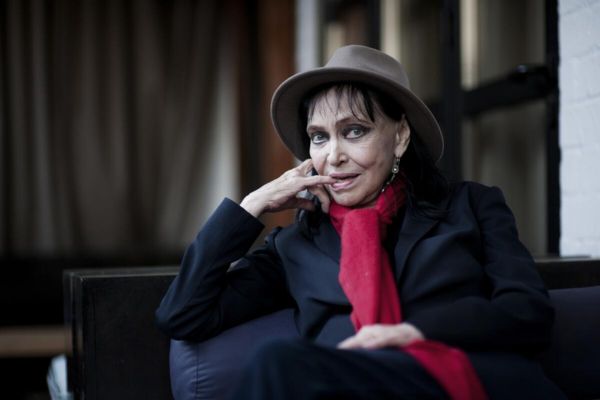
Who Was Karina Anna?
Karina Anna is commonly associated with Anna Karina, the Danish-French actress who became one of the defining faces of French New Wave cinema. Born Hanne Karin Blarke Bayer on September 22, 1940, she built an extraordinary career across acting, directing, singing, modeling, and writing. Her work with Jean-Luc Godard made her internationally recognizable, but her achievements extended far beyond their famous professional partnership.
Anna Karina developed her career during a period when European cinema was challenging traditional storytelling. Rather than relying on conventional performances, directors of the French New Wave embraced natural movement, unusual editing, location shooting, and emotionally complex characters. Karina fit this new style remarkably well. Her expressive eyes, distinctive presence, and understated performances helped create a screen identity that audiences and filmmakers continued to remember for decades.
Karina Anna and Her Early Life
Anna Karina grew up in Denmark and discovered her interest in performance while still young. Before becoming an established actress, she worked as a model and appeared in Danish entertainment projects. Her early experiences eventually encouraged her to pursue opportunities in France, where she hoped to build a career in cinema. That move became the turning point that transformed an ambitious young performer into an international cultural figure.
After arriving in Paris as a teenager, Karina entered the fashion and modeling world. She appeared in magazines and advertising campaigns while learning French and becoming increasingly interested in acting. Her striking appearance attracted attention, but she wanted more than modeling work. She began studying cinema independently and pursuing acting opportunities, gradually moving toward the French film industry that would define much of her professional life.
How Anna Karina Got Her Famous Name
The name Anna Karina itself became part of her public identity. According to biographical accounts, she encountered Coco Chanel while working in the fashion industry, and Chanel suggested the name “Anna Karina.” The new name proved memorable and perfectly suited the elegant, modern image she would later develop on screen. Her transformation from Hanne Karin Bayer into Anna Karina reflected the beginning of a carefully shaped artistic identity.
Her transition into cinema happened at exactly the right moment. French filmmakers were beginning to reject some of the polished conventions associated with established studio filmmaking, creating opportunities for performers with unusual personalities. Consequently, Karina became part of a generation that helped redefine European film acting. Her career illustrates how fashion, cinema, youth culture, and artistic experimentation could intersect during the early 1960s.
Karina Anna and Jean-Luc Godard
The name Karina Anna is especially connected with Jean-Luc Godard, one of the central directors of the French New Wave. Godard first noticed Karina through advertising and eventually cast her in The Little Soldier. Their professional relationship quickly developed into one of the most recognizable actor-director partnerships in modern European cinema. They also married in 1961, making their artistic collaboration deeply connected with their personal lives.
Their collaboration produced several landmark films. Karina appeared in The Little Soldier, A Woman Is a Woman, My Life to Live, Band of Outsiders, Pierrot le Fou, Alphaville, and Made in USA. These productions demonstrated her range while also establishing a recognizable visual and emotional style. Although audiences often described her as Godard’s muse, reducing her career to that label overlooks her independent creative accomplishments.
Her Most Important Films
One of Karina’s most celebrated performances came in A Woman Is a Woman, Godard’s colorful 1961 musical-inspired comedy. She played Angela, an exotic dancer caught between romantic expectations and personal desires. The film deliberately played with Hollywood musical conventions while using Godard’s unconventional cinematic language. Karina’s performance earned her the Silver Bear for Best Actress at the Berlin International Film Festival, an important recognition of her acting ability.
My Life to Live and Band of Outsiders
Karina delivered another memorable performance in My Life to Live, playing Nana, a woman whose life changes dramatically as she enters prostitution. The film explores identity, isolation, money, relationships, and the ways people can become trapped by circumstances. Her performance helped demonstrate that Karina could carry emotionally demanding material rather than simply serve as a visual presence within Godard’s experimental filmmaking style.
In Band of Outsiders, released in 1964, Karina played Odile in a playful crime story involving two men and a planned robbery. The film became known for its unconventional humor, movement, and memorable sequences, including the famous Louvre run and dance scene. Karina’s relaxed performance complemented the movie’s unusual rhythm and helped make it one of Godard’s most accessible and enduring French New Wave films.
Pierrot le Fou and Alphaville
Pierrot le Fou further strengthened Karina’s reputation as a major figure of 1960s cinema. Although Jean-Paul Belmondo leads the film, Karina’s presence is central to its emotional and visual identity. The film combines romance, crime, political commentary, colorful imagery, and fragmented storytelling. Decades later, it remains widely discussed as an influential example of Godard’s radical approach to filmmaking.
Karina also appeared in Alphaville, a striking science-fiction film that combined futuristic themes with the visual language of film noir. Her performances across different genres demonstrated an important quality: adaptability. She could move from comedy to drama, romance to science fiction, and conventional storytelling to experimental cinema without losing the distinctive screen presence that made her recognizable.
A Career Beyond Jean-Luc Godard
Although her work with Godard remains the most searchable part of her biography, Karina’s career did not end with their collaboration. She worked with several respected directors and appeared in international productions, including The Magus, Before Winter Comes, Laughter in the Dark, Justine, and Chinese Roulette. Her later filmography shows that she remained active beyond the French New Wave period.
Karina also moved behind the camera. In 1973, she wrote, directed, and starred in Vivre Ensemble, demonstrating that her creative ambitions extended beyond acting. This achievement is particularly significant because it challenges the common image of her as simply an actress associated with a famous director. By taking control of a film’s writing and direction, she established herself as a filmmaker with her own creative perspective.
Karina Anna as a Singer and Writer
Acting was only one part of Karina’s artistic career. She also developed a successful musical identity and worked with celebrated French songwriter Serge Gainsbourg. Her recordings included songs associated with the television musical Anna, while music remained an important part of her artistic expression. This combination of cinema and music strengthened her position within the broader creative culture of 1960s France.
Writing provided another outlet for her creativity. Karina wrote novels and worked on literary projects connected with her filmmaking. Her interests therefore crossed several disciplines rather than remaining confined to the screen. When considering Karina Anna’s legacy, this broader creative work matters because it reveals an artist who consistently explored different forms of expression throughout her career.
Her Influence on Fashion and Cinema
Anna Karina became influential not only because of her films but also because of her distinctive style. Her dark hair, expressive eyes, simple clothing, and effortlessly modern appearance became strongly associated with the visual culture of the French New Wave. However, her influence went deeper than fashion. She represented a new type of screen performer whose individuality could become an essential part of a film’s identity.
Her cinematic legacy has remained particularly strong among filmmakers, actors, fashion designers, and film enthusiasts. Movies such as My Life to Live, Band of Outsiders, and Pierrot le Fou continue to receive critical attention and retrospective screenings. The British Film Institute, for example, continues to feature her work within its programming and archival discussions of influential cinema.
Anna Karina’s Later Years and Legacy
Anna Karina continued working in film and music after the peak of the French New Wave. She remained connected to cinema through performances, interviews, retrospectives, and creative projects. Her career demonstrated unusual longevity because she successfully moved between different artistic roles instead of relying exclusively on the image that had made her famous during the 1960s.
Karina died in Paris on December 14, 2019, at the age of 79. Her death prompted widespread tributes recognizing her contribution to French and international cinema. While she is often remembered alongside Jean-Luc Godard, her career deserves to be considered independently. She was an actress, filmmaker, singer, writer, and cultural figure whose work continued to attract new generations of viewers.
Conclusion: Why Karina Anna Still Matters
Karina Anna, better known as Anna Karina, remains an enduring name in the history of European cinema. From her early years in Denmark to her rise in Paris, she built a career that crossed acting, filmmaking, music, writing, and fashion. Her collaborations with Jean-Luc Godard gave her international fame, yet her independent work proved that she was much more than a director’s muse. Her artistic legacy continues to make her an important figure in film history.